
PlantNet

PlantNet

Download on App Store
Spark by MWM logo
Logo of PlantNet

PlantNet: Identify Plants Instantly and Power Global Citizen Science

Snap a photo to discover the species around you and join a global community of nature lovers. Your observations do more than identify—they help scientists track and preserve our planet’s biodiversity.

Download on App Store

Publisher

CTRE COOP INTERNAT RECHERCHE AGRO DEV

Category

Education

Downloads

15M+

User Rating

4.6/5

Total Ratings

33K+

Locales

41

Nature at Your Fingertips

Discover the interface used by 15M+ users.
PlantNet mobile app screen showing identified plants with scientific names and photos

PlantNet mobile app screen showing identified plants with scientific names and photos

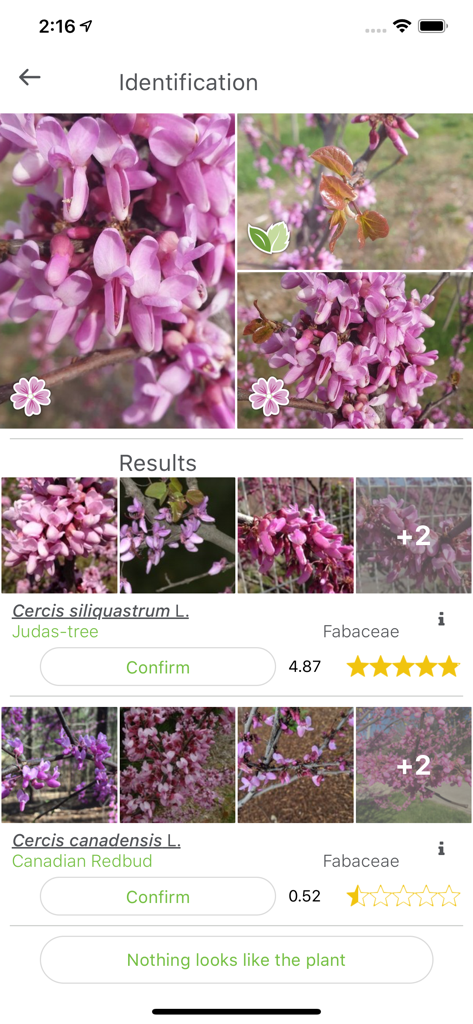
PlantNet app screen showing identification results for a flowering Judas tree with scientific names and photos

PlantNet app screen showing identification results for a flowering Judas tree with scientific names and photos

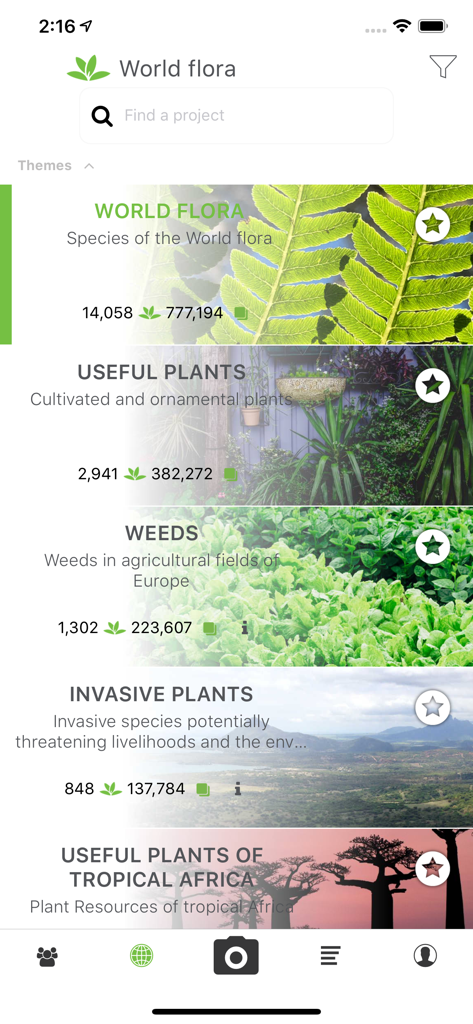
PlantNet app screen displaying a list of botanical projects including world flora and invasive plants

PlantNet app screen displaying a list of botanical projects including world flora and invasive plants

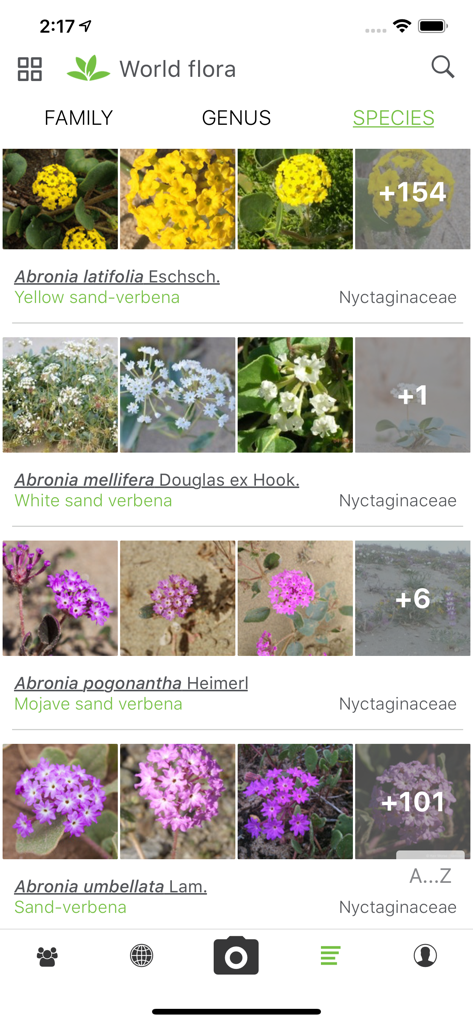
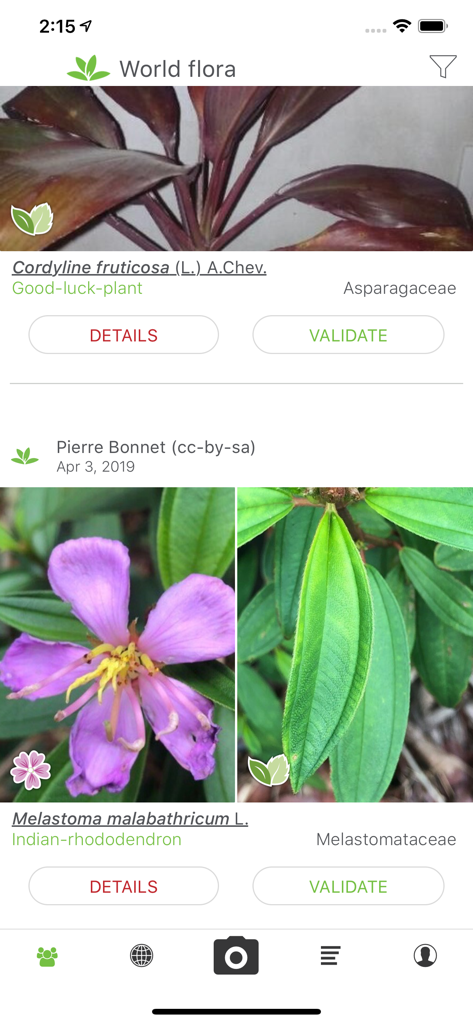
PlantNet app interface showing a list of plant species with scientific names and photos for world flora identification

PlantNet app interface showing a list of plant species with scientific names and photos for world flora identification

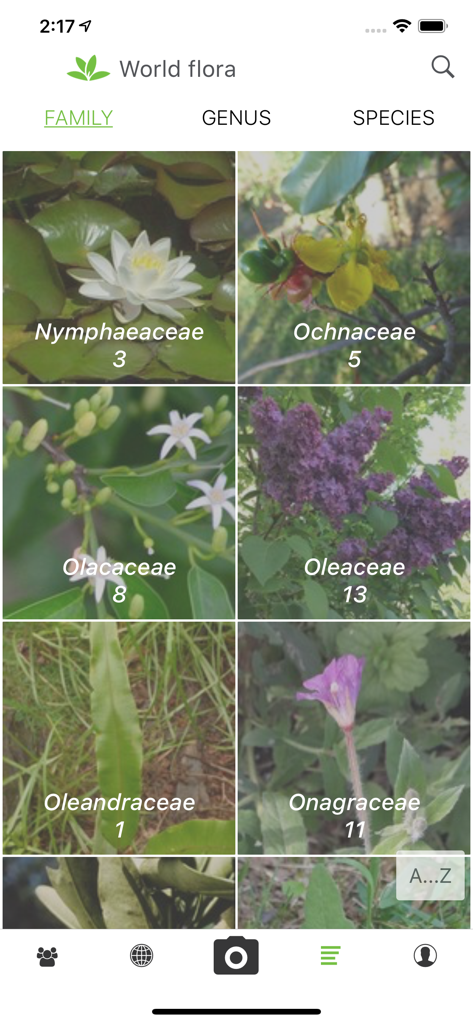
PlantNet app interface showing a grid of plant families with photos and species counts under the World flora section

PlantNet app interface showing a grid of plant families with photos and species counts under the World flora section

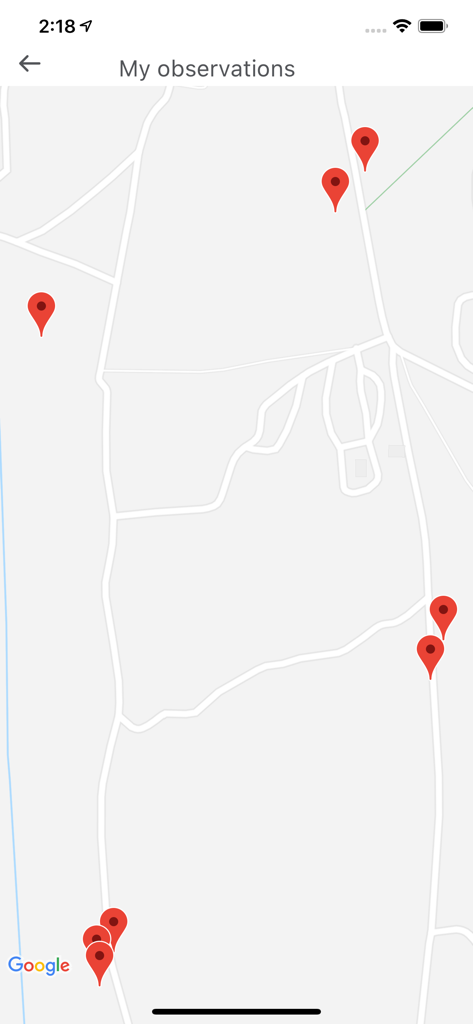
A map screen within the PlantNet app displaying red pins marking locations of recorded plant observations

A map screen within the PlantNet app displaying red pins marking locations of recorded plant observations

Uncover the Secrets of Nature

The tools that make this app stand out, trusted by 15M+ users.

📸

Instant Visual Recognition

Snap a photo of any leaf, flower, or fruit to receive an immediate, scientifically-backed identification from our massive database.

🌍

Impactful Citizen Science

Every observation you share provides vital data for scientists worldwide to better understand and preserve our planet's biodiversity.

🧠

Deep Botanical Knowledge

Go beyond names with detailed factsheets, family filters, and mapping tools designed for the curious lifelong learner.

Loved by users worldwide

Trusted by 15M+ people who love this app.

"

"As an avid hiker, this app has completely changed my experience on the trails. It's like having a professional botanist in my pocket at all times. I love that my photos aren't just for my own curiosity but actually help scientists track global biodiversity. The accuracy is incredible, even for rare wildflowers."

Sarah Jenkins
"

"I've tried many plant ID apps, but PlantNet stands out because of its scientific rigor and community-driven validation. It's refreshing to use a tool that focuses on education and conservation rather than just selling subscriptions. Identifying the 'sidewalk botany' in my city has become my favorite weekend hobby."

David Chen

About the app

Everything you need to know about PlantNet.

Description

Pl@ntNet is an application that allows you to identify plants simply by photographing them with your smartphone. Very useful when you don't have a botanist on hand! Pl@ntNet is also a great citizen science project: all the plants you photograph are collected and analysed by scientists around the world to better understand the evolution of plant biodiversity and to better preserve it. Pl@ntNet allows you to identify and better understand all kinds of plants living in nature: flowering plants, trees, grasses, conifers, ferns, vines, wild salads, cacti (and many more). Pl@ntNet can also identify a large number of cultivated plants (in parks and gardens) but this is not its primary purpose. We especially need Pl@ntNet’s users to inventory the wild plants, those that you can observe in nature, but also those that grow on the sidewalks of cities or in the middle of your vegetable garden! The more visual information you give to Pl@ntNet about the plant you are observing, the more accurate the identification will be. There are indeed many plants that look alike from afar and it is sometimes small details that distinguish two species of the same genus. Flowers, fruits and leaves are the most characteristic organs of a species and it is them that should be photographed first. But any other detail can be useful, such as thorns, buds or hair on the stem. A photograph of the whole plant is also very useful information, but it is often not sufficient to allow a reliable identification. At present, Pl@ntNet makes it possible to recognize about 20,000 species. We are still a long way from the 360,000 species living on earth, but Pl@ntNet is getting richer every day thanks to the contributions of the most experienced users among you. Don't be afraid to contribute yourself! Your observation will be reviewed by the community and may one day join the photo gallery illustrating the species in the application. The new version of Pl@ntNet released in January 2019 includes many improvements and new features: -The ability to filter recognized species by genus or family. -The differentiated data revision that gives more weight to users who have demonstrated the most skills (in particular the number of species observed, validated by the community). -The re-identification of shared observations, whether yours or those of other users of the application. -The multi-flora identification that allows you to search for the photographed plant in all the flora of the application and not only in the one you have selected. Very useful when you are not sure what flora to look for. -The selection of your favorite floras to access them more quickly. -The navigation at different taxonomic levels in image galleries. -The mapping of your observations. -Links to many factsheets. The web version of the application is also available at the following address: https://identify.plantnet.org/

Latest Version

3.23.4

Size

72.5 MB

First Released

Feb 15, 2013

Start Your Journey as a Citizen Scientist

Download PlantNet today to identify the world around you and contribute your observations to global biodiversity research.

Download on App Store
FAQ

Frequently Asked Questions

Everything you need to know about PlantNet

What is PlantNet and how does it work?

PlantNet is an application that identifies plants from photos taken with a smartphone. It functions as a citizen science project, collecting data analyzed by scientists globally to understand plant biodiversity.

How does PlantNet accurately identify plants from photos?

PlantNet identifies plants by analyzing smartphone photographs. Providing diverse visual information, such as flowers, fruits, leaves, thorns, or buds, significantly increases the accuracy of its identification results.

How many plant species can PlantNet identify?

PlantNet currently recognizes approximately 20,000 plant species. This number is continually enriched daily through active contributions from experienced users and validated community observations.

Can PlantNet identify cultivated plants?

Yes, PlantNet identifies many cultivated plants found in parks and gardens. However, its primary function is to inventory wild plants observed in nature or urban environments.

What new features were added to PlantNet in the 2019 update?

The January 2019 PlantNet update added species filtering by genus/family, differentiated data revision, re-identification of shared observations, multi-flora identification, and observation mapping. It also includes links to factsheets.

Does PlantNet offer a mapping feature for plant observations?

Yes, PlantNet allows users to map their observations. This feature, introduced in January 2019, visually displays the locations where users have identified and documented plants.

Can users filter plant species by genus or family in PlantNet?

Yes, PlantNet enables users to browse and filter identified plants by family or genus. The application facilitates navigation through taxonomic levels within its image galleries.

How does PlantNet use citizen science and community contributions?

PlantNet is a citizen science project. Users contribute plant photographs, which are collected and analyzed by scientists. Observations are reviewed by the community, enhancing the app's database.

Is there a PlantNet web version available?

The official web version of PlantNet is accessible at https://identify.plantnet.org/. This provides an online platform for plant identification and community engagement.

What visual details improve PlantNet's plant identification accuracy?

PlantNet's identification accuracy improves with more detailed visual information. Photographs of characteristic organs like flowers, fruits, and leaves are most helpful for reliable species differentiation.